Are you excited to create your very first real estate website? You might be wondering how to get started. This comprehensive guide will help you build your real estate website quickly and efficiently. Contrary to popular belief, building a website is simpler than it seems when you have the right guidance and tools.
If you’re new to the real estate industry, focus on incorporating essential features and creating a clear, user-friendly real estate directory. If you want to generate leads passive income through an online directory, here’s a step-by-step approach to get you started.
1- Register Your Domain Name
Take a glance at gulberg executive housing Multan — they have an official website that shares crucial information, updates, and announcements. Their domain name effectively represents their housing scheme, making the site easily identifiable.
Your domain name serves as your website’s online identity. It should be simple, easy to remember, and relevant to your real estate brand. Keep in mind the increasing competition for domain names, so prepare alternative options to secure a suitable name.
2- Choose a Reliable Web Hosting Plan
Selecting a web hosting provider is more complex than choosing a domain name. Numerous reliable providers offer various plans to suit different budgets.
Web hosting is essential to launch your website. For example, Bluehost is a popular option for hosting real estate websites due to its ease of use and scalability. If you are unsure, start with a basic plan and upgrade as your site grows.
3- Install WordPress
The next step is selecting the platform to build your website. WordPress remains the top choice due to its user-friendly interface and flexibility.
WordPress offers a vast array of pre-built themes and powerful plugins available in WordPress, perfect for real estate businesses. Since it is a Content Management System (CMS), you can easily add and update content to boost your website traffic and improve search engine rankings.
Plus, you don’t need coding skills to customize your site with WordPress!
4- Focus on User Experience (UX) Design
As a real estate business owner, you know how critical appealing design and user-friendly features are for engaging your target audience.
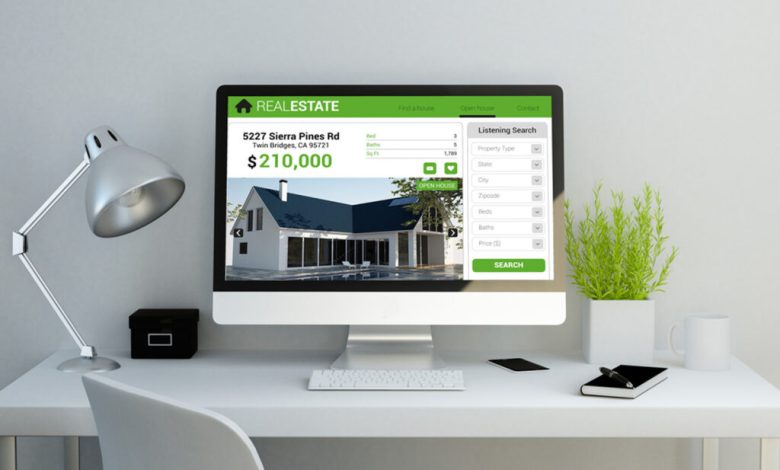
The first impression counts. To keep visitors engaged, design an authentic, visually attractive website with features like advanced search filters, photo galleries, and interactive widgets. Including high-quality images in your property listings builds trust significantly—studies show that listings with photos can increase sales by up to 88% by accelerating buyer decisions.
5- Enhance Searchability for Your Listings
Clients often look for properties in specific locations, price ranges, and with certain amenities. To improve your website’s searchability, create dedicated pages focused on popular areas—for example, list properties by neighborhoods, housing schemes, or city sectors.
Populate these pages with detailed descriptions, high-resolution images, pricing, and payment plans. An easy-to-navigate search filter will help clients find properties that meet their needs quickly, increasing the chances of inquiries and sales.
6- Ensure Your Site is Mobile-Friendly
Imagine browsing a site on your phone that’s poorly optimized and difficult to navigate. It frustrates users and increases bounce rates.
Make sure to choose themes and builders that are fully responsive and mobile-optimized, such as many WordPress Responsive Themes. Your real estate website should deliver a seamless experience across all devices to retain visitors and maximize engagement.
Conclusion
When building your real estate website, do not overlook integrating IDX (Internet Data Exchange) to access multiple listing services efficiently.
The real estate market is highly competitive, but leveraging the internet strategically gives agents and property owners a significant advantage. A well-designed website with the right features can drive leads, build trust, and grow your business. Follow these expert tips to start your online real estate journey today!
Read More: TOP 6 PLACES TO INVEST IN REAL ESTATE
Additional Insight: In 2024, the real estate online landscape continues to evolve with technologies like AI-powered chatbots and virtual tours becoming essential elements of successful websites. Incorporating these tools can greatly enhance user engagement by providing real-time assistance and immersive property experiences. Moreover, optimizing your website’s SEO with localized keywords and regularly updated market content can improve your ranking on search engines, attracting more qualified leads. Staying updated with digital marketing trends and user behavior will give you a competitive edge in creating a high-converting real estate website.