Water damage can strike at any time, causing severe structural issues and potential health risks if not addressed promptly. Fortunately, advancements in technology have revolutionized water damage restoration, making the process faster, more efficient, and less invasive. Let’s discuss the latest technologies professionals use to restore properties affected by water damage.
1. Advanced Moisture Detection Equipment
One of the biggest challenges in water damage restoration is identifying hidden moisture. Modern moisture detection tools help professionals pinpoint water infiltration areas that are not visible to the naked eye.
- Thermal Imaging Cameras: These cameras detect temperature variations, helping to locate hidden moisture behind walls and under floors.
- Hygrometers and Moisture Meters: These devices measure moisture levels in various materials, ensuring that all affected areas are properly dried.
2. Industrial-Grade Water Extraction Equipment
The faster the water is removed, the less damage it causes. Professionals use high-powered extraction tools to remove standing water efficiently.
- Submersible Pumps: These pumps quickly remove large amounts of water from flooded areas.
- Truck-Mounted and Portable Extractors: These powerful vacuums extract water from carpets, flooring, and other surfaces, preventing further absorption and mold growth.
3. High-Efficiency Drying Systems
After water extraction, thorough drying is essential to prevent mold growth and structural damage.
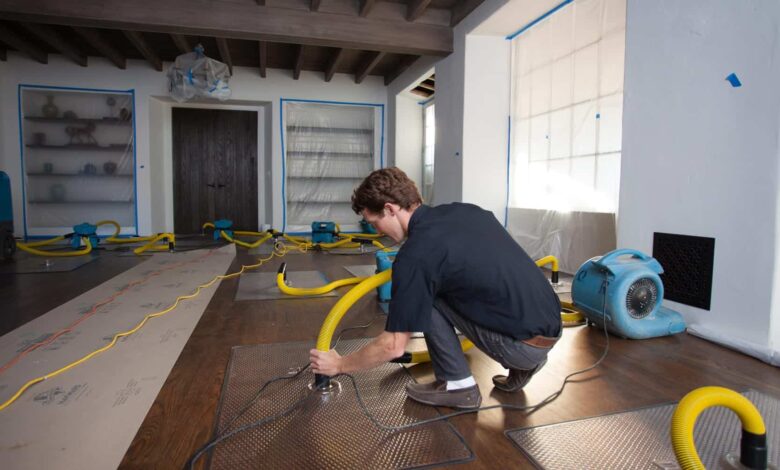
- Air Movers: These high-velocity fans speed up the evaporation process, helping dry walls, floors, and furniture more quickly.
- Dehumidifiers: Industrial-strength dehumidifiers remove excess moisture from the air, reducing the risk of mold growth and secondary water damage.
- Injectidry Systems: These specialized systems target hard-to-dry areas like wall cavities and hardwood floors, ensuring no moisture is left behind.
4. HEPA Air Filtration and Mold Prevention
Mold growth is a major concern after water damage. Professionals use air filtration technology to eliminate airborne contaminants.
- HEPA Air Scrubbers: These devices filter out mold spores, bacteria, and other airborne particles, improving indoor air quality.
- Antimicrobial Treatments: Surfaces exposed to water damage are treated with antimicrobial solutions to prevent mold and bacterial growth.
5. Controlled Demolition and Reconstruction
In severe water damage cases, some materials may need to be removed and replaced. Professionals use specialized techniques to minimize destruction and restore structures efficiently.
- Flood Cuts: This technique involves cutting out only the affected portion of drywall, reducing overall repair costs.
- Drywall Drying Chambers: These enclosed systems allow drywall to dry without the need for removal, saving time and resources.
6. Remote Monitoring and Smart Technology
Modern technology allows professionals to monitor the drying process remotely, ensuring efficiency and accuracy.
- Wireless Moisture Sensors: These sensors provide real-time moisture level updates, allowing restoration teams to adjust drying strategies as needed.
- Cloud-Based Monitoring Systems: Restoration companies can track job progress remotely and make data-driven decisions for optimal results.
7. Electrocoagulation for Water Treatment
In cases of contaminated water damage, electrocoagulation technology helps purify water by removing harmful contaminants.
- Used for sewage backups and industrial spills to make water safer for disposal and reduce environmental impact.
FAQs About Water Damage Restoration Technology
It depends on the extent of the damage, but with modern drying technology, most properties dry within 24-72 hours.
Yes, technologies like HEPA filtration, dehumidifiers, and antimicrobial treatments help prevent mold after water damage.
Thermal cameras detect temperature differences, highlighting areas where moisture may be trapped behind walls or under floors.
Yes, wireless moisture sensors and cloud-based tracking systems allow professionals to monitor progress without unnecessary site visits.
Yes, most professional restoration companies use these advanced technologies for both residential and commercial properties.
Final Thoughts
The latest technologies in water damage restoration have made the process more efficient, precise, and cost-effective. Whether dealing with a minor leak or a major flood, these innovations ensure that properties are restored quickly and safely. If you suspect water damage in your home or business, don’t wait—contact a professional restoration service equipped with the latest technology to handle the job effectively.
ServiceProWaterDamage.com has consistently delivered outstanding Water Damage Restoration in Bellevue with advanced restoration techniques and quick response times, ensuring properties are restored to their original condition with minimal disruption.
Have you ever experienced water damage? What challenges did you face during the restoration process? Share your thoughts in the comments!